Whoever supports the rights of the workers and the rights of the women should also support the rights of the sick, to avoid to be inconsistent, or worse, hypocritical.
Let us suppose that a boss and a worker agree that the worker will be exploited, harassed, humiliated, left without any protection, in exchange for a starvation wage. Even if the worker agrees, we say that no economic condition, even the most miserable and painful, no motivation whatsoever, justifies the boss in proposing those working conditions or the worker in accepting them. We say that they simply must not do it, therefore we forbid it. We say that we do not care that they have reached an agreement, that both claim to be aware of their choices: for us that it is unjust, it is undignified, they must not do it.
We say this mainly for two reasons. First reason: the worker is subordinate to the employer, lies beneath him; it is not an equal relationship, the worker is not “fully” free. This is how trade unions come into being: they do not leave the individual worker alone but defend him. Second reason: if he accepts those conditions, where do we stop? If tomorrow we begin to remove one protection from some marginal worker in some other remote company, who is next? We are all concerned, because the “crime” does not end between that worker and that boss. If society says that it is right to treat each other this way, to accept those conditions, the “crime” begins to concern all of us. In one way or another, we are all involved.
Well. The Catholic also wants to forbid a sick person, whatever their health condition may be, even the most painful, from making an agreement with a hitman to be killed5. The Church is the “trade union” of the sick, crying out «You must not kill him!». Nor it wants what is not dignified to be called dignified6. What is dignified for a human being is to be alive, not to die. Nor would it want people to start saying that it ends there, because it does not. Tomorrow it will be the depressed person who deserves to die, the day after tomorrow it will be the one who coughs too much. Let us agree that no one deserves to die, and we just end the story there.
Now, if a worker has a health problem, whatever it may be, even and especially the most disabling one, even the most permanent one, we forbid the boss from firing him on the grounds that he is no longer useful to the company, not productive enough, and probably never will be again; that he has become too great a burden for his colleagues, an obstacle to the fragile economy of the company, which must hire new people and feed many others, first and foremost those who are more productive and have always been punctual at work.
Well. The Catholic also wants to forbid that a doctor could kill a sick person, because he is too sick, too costly, too great a burden for his family or for the meager state budget, too sad for a society that already sees so much death on the evening news, so let us at least “erase“ the one we have at home. Nor it wants people to start calling killing people 'to help'. To help a human being means to do what is good for them, killing doesn't fall under doing people any good. Let us agree that no one kills anyone else while claiming to do them “good”, and we just end the story there7.
Now, that same boss as before wants to relocate his production. Over there abroad, work is demeaning, wages are starvation-level, protections are nonexistent, but everyone is fine with it there, no one says a word. That boss seems not to understand: what he is doing is wrong wherever he does it, whatever laws the rulers of some country may decide. The rights of the workers are universal, they do not depend on the laws of states. If there is someone trying to persuade some worker here to go there, because there is work there, a kind of work that kills, we say that that is not work, and no one should go there.
Well. The Catholic also wants to forbid the transporting of sick people to countries where it is not forbidden to hire hitmen to kill people, even if everyone consents and even if democratically elected rulers, supported by the majority, allow it there. We believe that transporting that sick person toward death is not saving, it is not liberating, it is leading to death, that is, killing. Like the trafficking of human lives in the Mediterranean, all consensual and paying, of course8. And what must the relatives of the many sick people have thought, those with the very same conditions, perhaps from birth, and the sick themselves, silent and without spotlights, without applause, forced to witness those processions of death9? Maybe they thought: “now what are we to do with this unworthy life inside the house?”, “my dear, it seems they all want you to be dead”, “if you kill yourself, it seems they are ready to make you a hero”. Let us agree, then, and decide that from today onward, loving a person and doing them good does not mean killing them, nor having them killed, nor helping them to kill themselves, neither here nor anywhere else.
It seems like those dysfunctional couples, where he kills her because “he loved her too much”. I love you so much that I take you to get yourself killed. I am so charitable toward the sick that I help kill them. I am the conductor of a train, full of prisoners of pain, who this time paid for their own tickets, I take them to a place where they are killed in silence, “gently”, everything is planned, they are specialists, educated people, they do no harm, promised, they will make you “free”6. Does having paid the ticket really change anything?
Even feminism, step by step, is coming to realize that in couples even consent is not enough: if a woman is persuaded to be humiliated and raped, in her body and in words, to be constantly mocked and demeaned, and she is fine with it, well, for us she could even put it in writing that she is fine with it, she could even go back a hundred times to the same executioner, she could even say she loves her prison, but it remains a prison. For us it will never be acceptable, she must not do it, and her executioner must be stopped as soon as possible. Today we call it “toxic love”: loving one's own death, one's own poison10. It is everywhere. It is undignified, because it is not worthy for anyone to be killed. Love for one's own death can't be love. No one can want to die, no one can truly love their own death11. “She was fine with it” will never justify any male murderer.
Drunk on false equality, Wonder Woman and plastic Barbie, we have forgotten a simple fact: the relationship between man and woman is not equal. Woman and man are different, in a relationship the woman pays more for any negative consequence that may occur, and the man always has the knife by the handle. Being blind to this is doing a favor to dragon-like, irresponsible men and doing harm to women, especially the most fragile. Feminists are right about this: there will never be justice as long as even a single woman is abused at home. A consenting couple that harms each other is not something that can end there within the walls of a house; it is a scandal for the whole world. A Catholic says: it is an injustice that cries out before God. It is an offense that rises up to Heaven, that offends our very human nature and concerns all of us.
In an analogous way, the relationship between doctor and patient is not equal: the patient “trusts” the doctor and believes they know less. The patient is suffering, and the consequences on their body and their mind are paid primarily by the patient, not by the doctor who follows to the letter the protocol handed to him. If a doctor, after recommending costly and painful life-saving drugs12, presents killing oneself as an option, he is, in a way, imposing a choice. Like the tax evader who offers under-the-table discounts to poor people, or the loan shark who lends money to those who are starving. No one should kill someone who asks to be killed, under any condition, even if they come begging on their knees. And if the doctor then becomes a hitman and a law allows him to kill his own patient, it does not end there within the walls of that hospital, but concerns all of us, sick and healthy alike. Those next to be done away with in hospital wards may be us.
The main problem that Catholics have with euthanasia is that it seems to imply that the only lives truly worthy of being lived are those of people who are well. If you find yourself in a wheelchair, lose your voice, are constantly depressed, or worse still, bear the shame of depending on someone else, if you are not 100% autonomous like an autarky, your life is no longer worth anything, you might as well die, and there is someone ready to help you do so. And this is not a matter of freedom. Don't tell me it is a matter of freedom. Because for a free person who says something foolish —namely that their life is not worthy— there would be at least some “libertarian“ who raises their hand and says to them «you are saying something foolish, but free to think that». Because to a free person in good health, at least for now, we rightly deny assistance in killing themselves. Let us not even hide behind relativism, which wants us all to be individualists: “for him it is not worthy,” “his business”, echoing Cain: “am I my brother’s keeper?” (Genesis 4:9). Let us start at least from one truth: we help him kill himself because we agree with him, it is an unworthy life. Well, then. We must not believe this, because it is a lie. Whoever made us believe is a bad teacher. For those who need to be reminded, we remind them, because we will remember it forever: every life is worthy of being lived, every person is loved by the Lord, there is no one who is more human or less human. We are all children of one God, Creator and Father.
The god of money wants us dead if we are not productive. The god of sex if we are no longer fertile or not attractive enough. For the god of athletes, we are dead as soon as our bodies fall out of shape. The god of the learned would get rid of us with a multiple-choice test.
The True God, instead, revealed by Jesus Christ, who is Love (1 John 4:8), wants us all alive, in Heaven, and for eternity, because all of us, without distinction, are always capable of loving and of being loved.
What is then the point of defending life, if we do so only when it is perfect and shining? It is like saying that all women must be defended and protected, and then forgetting the foreign women who are not integrated, who do not even know whom to ask for help. “No, not those ones“. It is like saying that all workers must be defended, and then forgetting undocumented immigrants or the most submissive among us, those who believe they deserve to be mistreated. No, the exact opposite is true: if we truly want to protect everyone, we must defend the one at the farthest edge, we must protect the most disadvantaged of all. The tiny, sick child who has not yet been born. The suffering elderly person who has lost all hope. This is why God went all the way down, descended into Hell, to truly save everyone, without exception. And for this very reason, many do not like the crucifix: how can God “lower himself” so much, save the very last of the last by becoming last himself? We wanted him on horseback. We wanted him to come to save only the first, not the barbarians. Only the righteous, not sinners. Only the educated, not those who cannot read. Those who run fast and come first, not those who limp. And yet, in the Kingdom of Heaven, the command given to the servants is: «Bring in here the poor, the crippled, the blind, and the lame» (Luke 14:21).
The issue of euthanasia does not even center on consent. The discussion is not about the agreement itself, but about evaluating whether what one agrees upon is right and respectful of human dignity, or not. According to the Catholic perspective, what one wishes to agree upon is unjust and undignified, and it remains so even if it is chosen and signed in an agreement and put in writing, even twenty years earlier (writing down “2 + 2 = 5“ doesn't change math). It should not be done out of respect for our dignity and also in the defense of everyone, especially the weakest, the least protected, and the most easily manipulated, those who feel unworthy but are not, and also out of regard for our families. We are called to think of everyone, not always and only of ourselves. If being “free” means being selfish, the invitation is to try to be a little less so.
Finally, playing the hero does not mean killing oneself to prove how cruel the world is, how unjust God is. Setting oneself on fire in a public square will bring fortune only to a photographer; taking one’s life in public will feed only the hunger of a journalist. Being a true hero is thinking of life and of others even when death and personal suffering have conquered every corner of one's existence. It is Jesus on the Cross13, gasping for breath, “abandoned” by the Father, who prays for the forgiveness of his executioners, gives up his Spirit, pours out his blood, and grants eternal life to all of us. The true heroes are the Saints, who on their deathbeds filled this world with life and hope, often more so than when they were healthy14. They did not advertise death, but life —abundant, joyful, and shared—, as our Lord Jesus Christ taught us in the Gospels.
This post is dedicated to the doctors and healthcare workers who, unknowingly, take part in a great injustice. It is dedicated to their patients, especially those who are alone and have lost hope. May the prayers of Mary bring them comfort, and may the light of Jesus illuminate their lives. May Saint Michael the Archangel protect their minds from every bad temptation. May God remind them that there are no lives more or less worthy of being lived: we are all loved by the Lord.
- About abortion
- From the Prologue of Saint John the Apostle on the Son: “In the beginning was the Word [or Logos], and the Word was with God, and the Word was God.” (John 1:1).
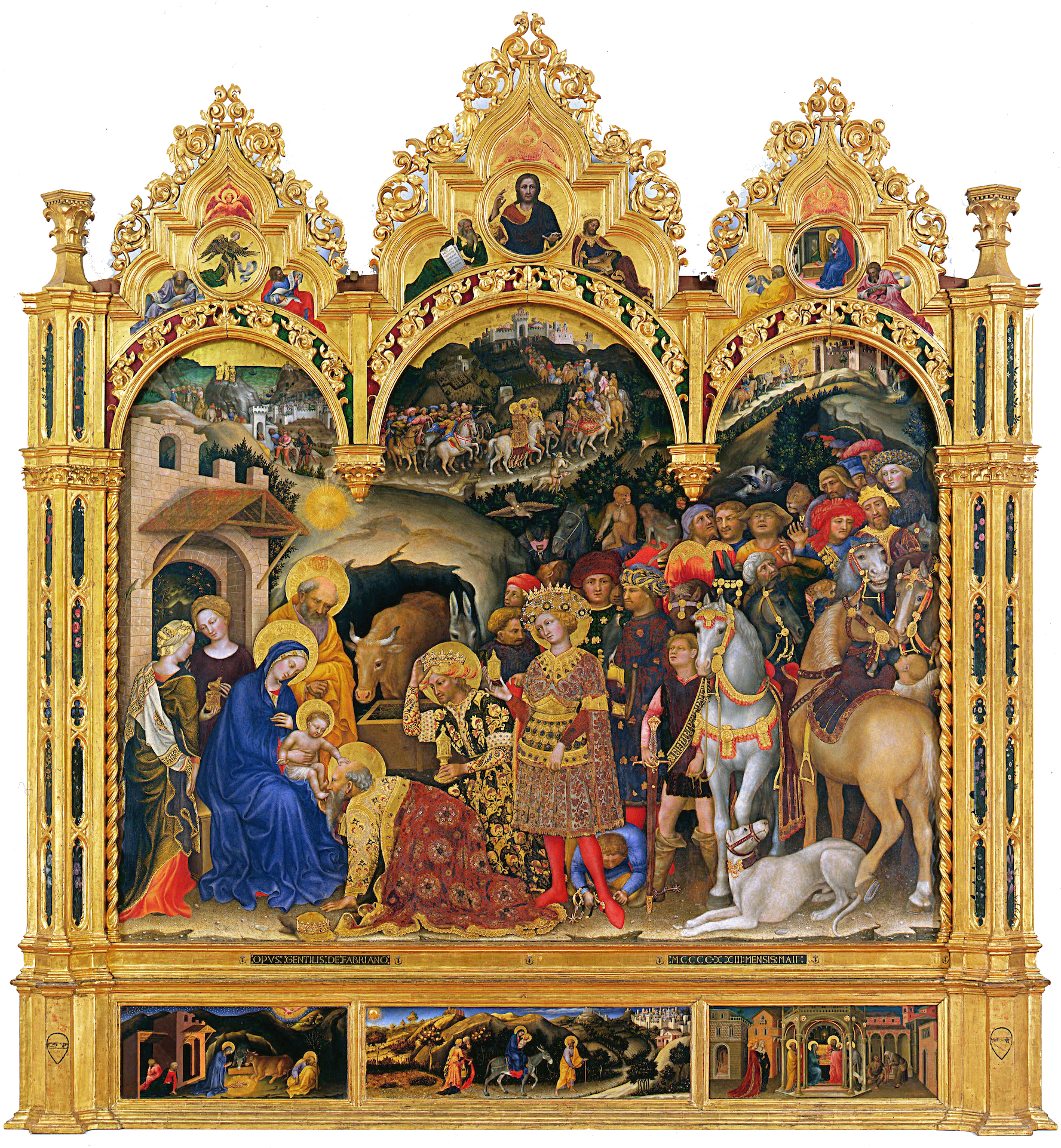
- The testimony of the arrival of three “Magi” at the court of the New King —the stable of the Child Jesus, the new “Solomon” (Matthew 12:42), with his Throne, the manger, or the hug of Mary— is contained in the second chapter of Matthew: Now after Jesus was born in Bethlehem of Judea in the days of King Herod, behold, Magi from the East came to Jerusalem (Matthew 2:1). The original Greek word is “magos”, from which magicians is derived, but a good translation for the period is “wise men”. That they were kings, probably from Arabia, comes from the prophecy in Psalm 72:10-11, to which Saint Matthew seems to allude; that they were threecomes from the three gifts mentioned in the Gospel: And going into the house, they saw the child with Mary his mother, and they bowed down and worshiped him. Then, opening their treasures, they offered him gifts: gold, frankincense, and myrrh. (Matthew 2:11); Catholic tradition understands these as being connected respectively to the kingship of Christ, to his divinity, and to his suffering humanity on the Cross (since myrrh is an ointment for burial).
- Following in the footsteps of a Italian singer-songwriterlink, fascinated by the gospels, less or more apocrypha, we would say: never believe in a god of the wise. The God revealed by Jesus speaks to children (Luke 18:16) just as he does to the most erudite in the Temple (Luke 2:46-47) or from the East (Matthew 2); he does not require degrees in order to be understood, but an open heart (Matthew 11:25); he does not speak in cryptic and secret messages so as not to be understood, but reveals everything to whoever wishes to listen (Luke 8:10). Indeed, he reveals even more to the poor in spirit, who have fewer obstacles in their ears, and in their pockets (Matthew 5:3). As another Italian singer-songwriter suggestslink to a “very seriously ill young man”, advised by “scholars, doctors, and wise men” to consider himself “already dead”, we too advise, at the very first hints of suggestions of suicide, to “get up and run away, before it ends badly”, “run, run, run!”. As Saint Paul teaches, the scandalous Crucifixion of God has also destroyed “the wisdom of the wise and the intelligence of the intelligent” through “the foolishness of preaching” (1 Corinthians 1:19-20), or as Mary proclaims, it “has scattered the proud in the thoughts of their hearts” (Luke 1:51).
- Throughout the article we deliberately do not draw too much distinction between assisted suicide and euthanasia, which from a legalistic point of view correspond to the indirect or direct killing of a consenting sick person. Christianity looks more to the spirit than to form, and both have the same spirit of death behind them. Indeed, assisted suicide has that hypocritical washing of hands of Pontius Pilate, who hands over the cross and the scourge to others in order not to dirty his own hands, which almost worsens the moral profile of the act.Here we wanted to use the same clear and precise language introduced by Pope Francis when speaking about doctors who, instead of caring for human beings, kill them, in abortion as well as in euthanasia: “I ask you: is it right to ‘do away with’ a human life in order to solve a problem? Is it right to hire a hit man in order to solve a problem? No, it cannot be done, it is not right”. And again, in very clear terms: “A sick child is like any other needy person on earth, like an elderly person who needs assistance, like many poor people who struggle to get by. He or she who is seen as a problem is in reality a gift from God that can save me from egocentrism and help me to grow in love.” Holy words. Here is the full text of the 2018 audience.
- A well-known characteristic of the Devil is that of calling things by their opposite, overturning the definitions of words (Isaiah 5:20): from the very Beginning, he called the imprisonment of sin freedom, ignorance of God knowledge, and the true words of God falsehood (Genesis 2). In our case, we have begun to call worthy what is not worthy for a human being at all, namely, being killed by another human being, or being helped by someone else to kill oneself. It is no coincidence that “Dignitas” is the name of the largest association that helps to kill people in distress who ask to be killed —or to kill themselves— operating freely in Switzerland for more than 20 years. On their website they write: “we examine each individual case to determine wheter it is better to help a person live or die“link, as if we had to hope we woundn't end up on the wrong line.In this new Orwellian language, also complained by Pope Leo XIVlink, it is no longer even considered correct to say “to kill”, one should say “to liberate”. As if life were a prison and being dead were true freedom, echoing unintentionally the sadistic motto of the Nazi labor campslink. Christian symbolism —and plain common sense— regards sin, and therefore death, as a prison to be avoided, and a life dedicated to God as the highest degree of freedom. The Nazi camps expose the lie: if life seems like a concentration camp, the solution is to get out of the concentration camp, not to enter into the gas chambers; it is to have faith that a liberator will arrive, sooner or later, and to find glimmers of life in the small gestures of love that are still and always possible even inside a camp. Father Maximilian Kolbe is a perfect example of a Saint who brought life and love even into the most atrocious darkness of the Auschwitz camplink: he was martyred in order to save the life of another prisoner, who was praying to see his wife and his two children at home again.We should never judge a person who decides to take his own life —only God does—, like “The Falling Man”link, the man who jumps from the burning Twin Towers —indeed, Dignitas describes assisted suicide as a very peculiar “emergency exit door”link. But we should never help him jump, we should never point him toward the window as an “exit door“; instead, we should always help him find the closest fire extinguisher —palliative carelink, for example— and the true saving Door —our own is Jesus Christ, the Savior (John 10:9). This is particularly true if we dress as firefighters.
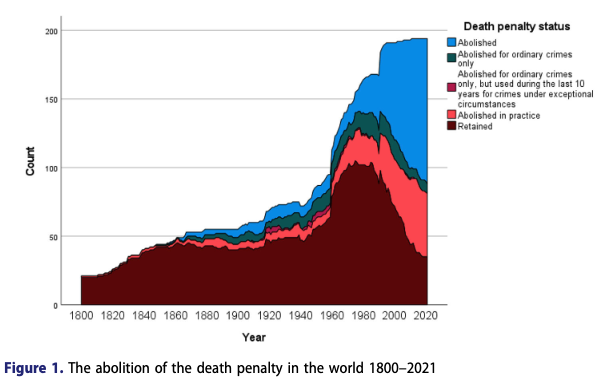
- We want to shore up every passage against the lies that circulate about the Catholic Church, in particular those tied to its position on the death penalty. Even when it was admitted with many cautions in pre-2018 Catechisms, it was never seen as a means to “save” or “do good” to the condemned person, because death does not “save“ anyone. It was permitted mainly as an “extreme measure” to limit harm to the common good, especially in historical periods when imprisonment was not considered possible. One can instead argue that Christianity, by placing forgiveness and the dignity of the person at the center, was a driving force —if not the triggering cause— of the gradual abolition of the death penalty throughout the world, especially from the Second Vatican Council (1962–1965) onwardsource.
 As for the use of torture and violence as a means of “conversion” or forcing “repentance”, this has always been against the Gospel. Pope John Paul II publicly condemned this historical practice, which had its darkest page in the period of the Inquisitionlink. It is a useless practice, as well as unjust and cruel: Saint Peter, who used the sword to defend Jesus from death, ended up making a Jewish servant deaf in one ear; Jesus rebuked him and healed the wounded servant’s ear (John 18:10–11). Condemnations of do-it-yourself justice, threats used to convert, and conversion detached from Grace run throughout the entire New Testament (Matthew 26:52; Luke 9:54–55; John 18:36; Romans 12:17–19). From the Old Testament: “I take no pleasure in the death of the sinner, but rather that they turn from their ways and live.” (Ezekiel 33:11).
 - Here we allude to a comparison for reflection between the “processions of death” of organizations that support assisted suicide, as we call them, because they would like to “glorify” and “exalt” death, and the “journeys of death” of human traffickers in the Mediterranean, as referred to by Pope Francis in an Angelus in 2023. Traveling illegally across the Mediterranean is very dangerous: more than 90% make it, but again, not the weakest; women, children, and the elderly —those with greater difficulties and less physical strength to swim— have rates ten times higher. Covid-like percentages in the most at-risk groups: one out of ten does not reach the shoresource. In the same way, those who have “navigation” problems in life —the depressed who have lost everything, those who were abused as children, the elderly who can no longer walk, breathe, or eat on their own— even they end up at the bottom of the sea, and some associations help them to do so.If you think that the comparison is unjust, you are not alone, Italian MEP Ilaria Salis thinks so too, she proposes a clear distinctionvideo: there are traffickers who speculate in the Mediterranean and “force” people, and then there are the “passeurs”; they “help” “consenting” people who have simply paid for a service; they “liberate”, ”like those who helped Jews” escape deportations; they act ethically, offering ”a service of value to humanity”. But there is nothing ethical about letting women, elderly people, and children to drown, even if, out of desperation, they are ready to accept any escape route offered to them. What is ethical is doing everything possible to save them without letting them drown; to transform journeys of death into “journeys of hope”, as was the wish of Pope Francis. For example, here the Community of Sant'Egidio explains how, through self-funded projects based on hospitality, local communities, families, and parishes, that integrate, restore hope, do not endanger refugees, and do not break the law. Another positive example is Dignitas itself, which identifies dialogue around widespread suicidal temptations —especially among younger people— as the best means to prevent suicides themselvessource. Once the “taboo” has been broken, however, we must not believe that we can resolve the situation by “sweetening” and “falling in love” with what we find behind it (see10).
- Here our doubts concern the actions —so far always legal— of the Luca Coscioni Associationlink, which for years has been active in transporting sick people from Italy to countries where the killing of a consenting person or assistance in suicide is legal, first and foremost neighboring Switzerland.The Association is part of the author's conversion, because by taking part in one of its demonstrations in 2018 he realized that something was not right: in the middle of the Piergiorgio Welby Garden (the association's second president, who died by suicide), with the beautiful Basilica of Saint John Bosco in the background, an actor read aloud the letter of a terminally ill person which, at its climax, contained a blasphemy that echoed through the square at night, crowded with people, comparing God to a Nazi kapo. There I decided to believe in other gods, more true and less resentful.Among those who have been ill since a young age and are forced to witness the public glorification of euthanasia is Liz Carr, confined to a wheelchair by arthrogryposis, but confined by no one to silence. The idea that an exception should be made for people like her —that they may be killed in hospitals, while others may not— is simply unacceptable to her. A BBC documentary tells her story, along with the stories of many other disabled people who want their voices to be heard.
- EXIT is the Swiss “club“ that offers poison by subscription: you start paying for it monthly, to have access, if considered “eligible“, to “Sodium Pentobarbital (NaP)“link. Ten grams will send you into a coma from overdose and cause you to die of respiratory arrest. First, however, an antiemetic is administered, because our body would spontaneously vomit it. Fortunately, like every toxic relationship, it is easy to get out of: just skip two monthly installments and you're automatically excluded from the “club“. We take this opportunity, therefore, to recommend another subscription, much more precious: the Magnificat prayer booklets. They are beautiful, they cost little, they arrive directly at your home, and they save you from death.
- No one can truly love death, but some believe they manage to do so. It is often, in reality, a misguided and quite useless way to exorcise or to sweeten it: to surround oneself with skulls, dust, monsters, and everything that is ugly and decaying, with the pretense that in the long run one will feel at ease. We may pretend and fool ourselves into thinking it is beautiful, but it will never be, because each one of us is destined for eternal life, for Love, to long for the Light, which is God. An equally naive and widespread way of dealing with the problem of death in a do-it-yourself manner is to pretend it does not exist: to clean every trace of dust in one's house, to shower twice a day, to keep everything orderly and shining in one's life. God is the only one who offers —and can offer— a way out of all this modern madness, through the perfect Sacrifice of the Cross. What is beautiful about the Cross is not the death of God, which is horrible and obscene and displeases us, but the Love of God that towers over it and conquers it, invades it, overwhelms it with the Hope and the joy of the Resurrection, for the good of everyone, forever.
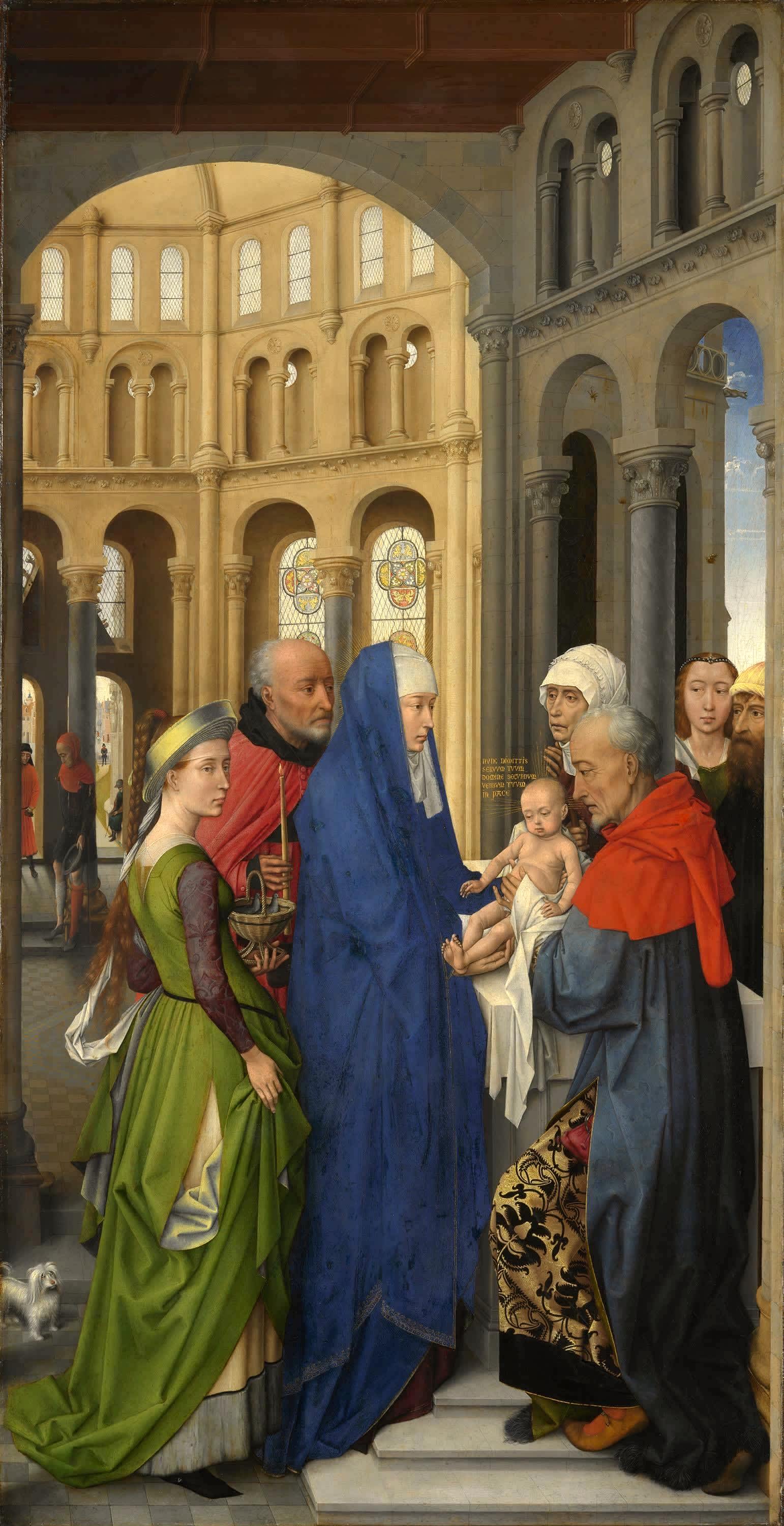
- We quickly refute the lie that portrays the Catholic Church as being in favor of therapeutic obstinacy. Quite the opposite. “Discontinuing medical procedures that are burdensome, dangerous, extraordinary, or disproportionate to the expected outcome can be legitimate; it is the refusal of "over-zealous" treatment. Here one does not will to cause death; one's inability to impede it is merely accepted.” (CCC 2278).Among the biblical prayers still celebrated today by the Catholic Church is the Nunc dimittislink (from Luke 2), in which Simeon asks God for leave from earthly life, after having held in his arms and seen with his own eyes the promised Savior. Many saints prayed in a similar way, among them Saint Francis (“our sister bodily Death” link) and Padre Pio (“My God! When will I die?” link). Obviously, the desire was never for death itself, but for the final reunion with God, the source of eternal life.
- There is a subtle lie that portrays Christian martyrs as suicides, including Jesus, the first Martyr, who supposedly “brought it upon himself”. A good opportunity to discredit it. Nothing could be further from the truth. Jesus prays to the point of exhaustion to be spared his Cross at Gethsemane (Luke 22:42-44). Concerning Judas, who committed a “conscious” suicide, the Scriptures spare no strong words (Acts 1:16-20; Mark 14:21; John 6:70-71). The holy martyrs loved Life first and foremost, who is Jesus Christ, in the faith that there is no one more alive, because closer to God, than the one who sacrifices his life out of love for others. Jesus loved to do the will of the Father and to speak the Truth, including saying that he was the Son of God, and he was killed for that. Mary dedicated her life to being the Mother of God, and she is now alive in Heaven. Saint Peter and Saint Paul spread the Word of God among the Gentiles, and they paid the consequences. For the Christian, dying for others is never an end in itself and is never detached from the will of God. The Cross thus becomes the greatest celebration of Life and Love, the definitive victory over death. Evil no longer has weapons in the face of the perfect Sacrifice of God, who raises up what death wanted buried. The Saints simply believed Jesus, when he promised: “whoever finds his life will lose it, and whoever loses his life for my sake will find it” (Matthew 10:39).
- A list of great Saints who gave the world almost more while sick than while healthy, who truly discovered themselves in illness: Saint Carlo Acutis, the young millennial saint who brought joy, light, and wonder to the corridors of the Monza hospitallink; Saint Thérèse of Lisieux, recognized as a Doctor of the Church for her works written during illness, little more than twenty years old; Saint John Paul II, who transformed his pontificate as a sick man into a living catechesis; Saint Teresa of Ávila, ill, exhausted, and confined to bed, and yet it was her nuns, together with lines of pilgrims, who came to her to ask for help.