Man-god hates nature, because it was born before him, will outlive him, and has immutable laws, while he seeks to modify and overturn them. He detests nature insofar as it precedes will, freedom, and desire, which are the totems of the false homo-deus. Nature is the victory of reality, of limits and of destiny. But there is no expression more unsettling for modern man than “according to nature“, because nature is reality. Animalism, environmentalism, veganism, fashions for the wealthy grappling with uneasy consciences. We speak of biological parents instead of natural ones, in order to discredit blood ties and turn man into a laboratory product.2
Modern man, when he encounters nature, wants to subdue it and dominate it. He does not admire it, does not wed it, does not love it. He does not explore caves, does not dive into lakes, does not venture into wild forests, but climbs in order to get above it, to conquer it, to dominate it, to place his feet upon it, to trample it, atop the highest peaks of the mountains. Reality, thus subdued and discredited, loses its value: what is touched and seen cannot be spiritual, cannot touch Heaven, cannot aim at something higher than itself, cannot speak to us of God. You notice it in the hatred toward the Saints, the clergy, rituals, rosaries, the Shroud, relics, crosses, statues, Mary. It is materialism, which despises matter and wants to keep it separate from Heaven. Everything is cheap. What is spiritual is now an amulet, that is, a game, a joke, a carnival, a horoscope, a superstition, because reality cannot have meaning, there can be no meaning in this world, everything is arbitrary, it is chance that rules here. Thus God could not have become man and Jesus was only a skillful preacher. We have evolved (by chance) to believe and to eat, yet we eat but do not believe.
And if God has abandoned this world, or never set foot in it, the new god is in the meta-worlds, in virtual realities and in artificial chatbots. Matrix has always been, from the very beginning, a desire, not a nightmare: reality is fiction, the true self is elsewhere. And many have remained trapped within this world (like the authors of Matrix): they now truly claim to be trapped in a body and a reality that are not theirs. A tension shared by many, in a world of fluid identities. But something singular happens: in a glimpse of pride, the mind thinks it can decide for itself. As in the best patriarchies, or despotic dictatorships —consecrated to the idol of Rationality and Science, which counts neurons to decide whether one is alive or dead— between mind and body, the mind always decides, the body is entirely ignored and subdued. Woe to anyone who tries to criticize the mind. It decides. And if language and propaganda are not enough, it uses force and technology, with the modern artifice of makeup, medicine, and the scalpel. The body is realigned, or brought back into line by the mind, which now would like to convince us in the same way as well, even with violence and intimidation3, that we live in the Matrix, that reality is appearance, that we are the mad ones, the “unawakened” —madness or dream is precisely when the mind travels in realities detached from those that are objective, evident, natural, tangible, earthly, true. Living in a simulation, therefore, was not a warning, but has always been a goal.
A kind of neo-Buddhism revival, where nirvana is attained by suffocating reality with machines. A sterile Tower of Babel destined for extinction. A nihilistic Platonism: reality is what is seen outside the cave, not what we live every day. True reality is what you see if you swallow the red pill of Matrix and exit this world. That the sun rises and sets is an illusion; true reality is what is seen outside this world, that the earth revolves around the sun, as aliens see us. But true reality is that of human beings, not of aliens4. The one man sees from the earth and from his body. True reality is not what lets us calculate when Mars will align with the earth relative to the sun, but what puts us in contact with the seasons, the dawn, the sunset, the night, the beasts that howl at night, the birds that wake with the sun, sleep, wakefulness, the stars above us, the constellations. The spectacle of God is seen from the audience, not from the storeroom. True reality is the one here on earth, the nearby one that can be touched, in our bodies, in our homes, in our families, in our cities, not the one on the news, or on the internet or on social media. We must return to living in our body, because we are not only souls, floating minds, we are souls and bodies, both indispensable, distinct, yet inseparable, like woman and man in the bond of holy marriage, like Heaven and Earth in the beginning, like Father and Son united in the Holy Spirit in one God, forever.
Regarding AI. Modern artificial intelligence is as intelligent as modern man is, that is, very little5. It sees as the Pharisees who claim to see, but do not see the miracles of Jesus. They are blinded by their pride, otherwise, they would see6. In the same way, modern man has lost the basic categories to perceive the world —male and female, what is a man, what is an animal, life and death— but continues to exchange Nobel Prizes and claims to see very clearly, indeed increasingly so —in the subatomic, in space, thousands of years away. Full of self, he looks at God, his Creator, and considers Him now superfluous, outdated, useless. Then he opens the newspaper and understands nothing, fears everything, and if something doesn't add up, he begins to alter reality with violence, rewrite history, or believe in the most fantastical conspiracies. The most absurd being that 11 apostles supposedly died wanting to sell us a lie7.
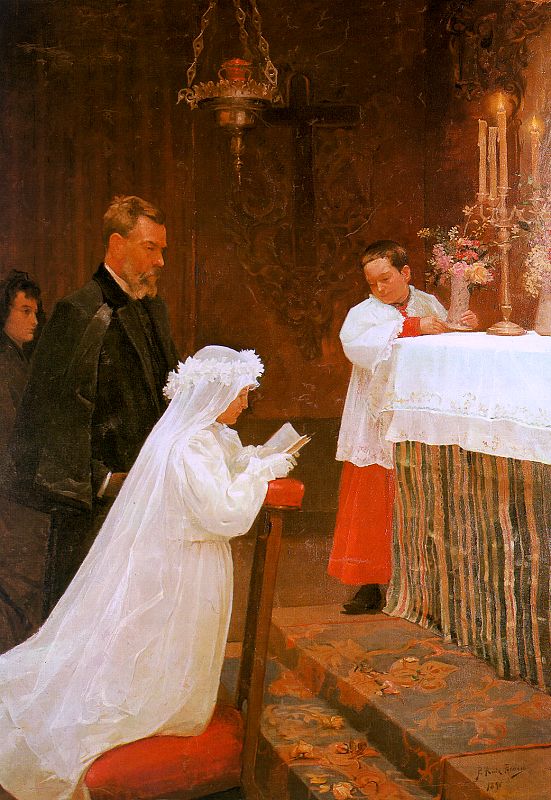
Believing that modern artificial intelligence is in any way truly intelligent is like believing one can become intelligent just by reading many books8, or become good Christians “by faith alone” after reading the entire Bible without ever putting it into practice. Yet one cannot claim to have known Jesus without ever touching a poor person, smelling a sick person, lifting a sick person, feeding a stranger, shaking the hand of a foreigner. Without ever seeing the lights in a cathedral, kneeling before the altar, smelling incense or candles, admiring the natural landscapes, listening to forests, streams, and the sounds of animals. Yet one cannot know God by “scripture alone”9 , without the sacraments of Jesus, made of water, oil, gestures, words, and the Holy Spirit. Saint Paul said that faith, to be true faith, must walk. Therefore, priests leave their parishes and speak with their flocks. Like the Good Shepherd, they smell them and know their names and their scent.
In the same way, an intellectual should know the dust of the streets, not just the dust of libraries, because otherwise they know nothing of the world and cannot speak about it. One cannot talk about the market if one has never set foot in it, nor speak of temples if one has only visited them as a tourist. The risk, as has happened recently, is to end up constructing crazy theories in our minds that are incompatible with the world, because they're not of this world, but exist only in our heads, virtual, utopian, “beautiful” in theory, which then require distortions, and therefore violence, to be imposed here on earth, in homes, in businesses, in society, and today even on bodies, including those of young people. For falsity has always required violence to impose itself as truth.
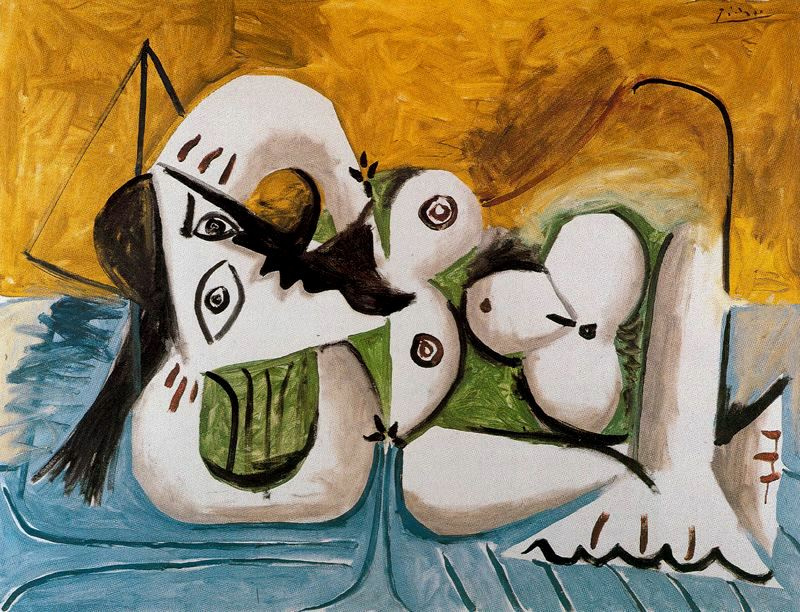
Modern artificial intelligence knows what it knows because it has read the entire internet10. Our young people have done the same. Including some of those who today put on colorful labels, or consider themselves painters, great artists, athletes, leaders, but their bodies tell a different story, reality tells a different story. Ah, but the body must not impose anything on us; we can be whatever we want! We can even be many things at the same time! In video games, as in Matrix and mental simulations, we can be princes, dragons, pirates, fairies, or superheroes. Finally freed from the body and the limits of reality, we can fly between buildings, like in a dream or an acid trip. The body is a burden, worthless, it tells us nothing, and if it tries to say something, it must be ignored, silenced, violated, and corrected; we must overcome it and get rid of it, this is the goal. The body is detested, as is nature, reality, the rules of this world. We no longer wish to know this world, not to praise and admire it like an explorer, like two lovers getting to know each other, but to change it, fix it, and use it our way: science degraded to mere technique. If everything is an arbitrary social construct, everything can be rebuilt anew, by force if words fail.
There have always been those who do with their bodies as they please, but it was never thought that a man could be a woman, or that a marriage could be between two men or two women11. This ontological upheaval is a recent phenomenon. It matters more to the critics than to lifestyles themselves (though they matter too). What concerns us is the arrogance of wanting to abolish basic truths, making victims of the youngest, often the most unaware, lost, and abandoned. Those perhaps raised without a father at home, with distracted parents, or with parents who are overbearing. In other words, families without a head, or with a head that cares little for those beneath it.
But lifestyles also concern us, because body and mind move together. We believe that mis-treating the body, that is using it in ways it does not ask to be used, is not something to be proud of, that it could be dangerous12, and certainly it is not something to present to children. And probably we all sense it, yet we just ignore it, because we care little for others, and we don't care to help them to grow. We exploit and celebrate distressed and confused people who need real help to conceal our own darkest shadows. That's our little secret. Because we all know that peace comes when head and body are in harmony, not a rebellious body, not a head that acts on its own. No one wants to feel alien in this life13, alien in their own body, no one wants to live on Mars, with a body that feels flawed, or that is not their own. We all want to live on the Earth.
To then say that machines could replace humans, or that this is even a hoped-for or inevitable goal, assumes that man can replace God, that creation can do without its Creator, or somehow manage to be more than it is. Ontologically, this is impossible, yet it is the oldest revolutionary impulse of all time, as well as the most falsified in history.
The rejection of reality and the body is also an ancient heresy14. An almost spontaneous heresy in a fallen world, a psychological default —everyone is born gnostic in a fallen world— where we are born with a memory and a longing for justice in our minds, yet see only injustice around us. So we wish to reach that paradisiacal world of our mind, but when we try to bring it into this world by our own strength, we create only bloody utopias or technological monsters, and end up despising this world. Like the Gnostics: we no longer eat red meat, we no longer drink wine because it harms us, sex is devalued into mere commodity or pastime, we become obsessed with health and “ideal” perfect bodies, we hate humanity, and we feel our lives as a “prison”.
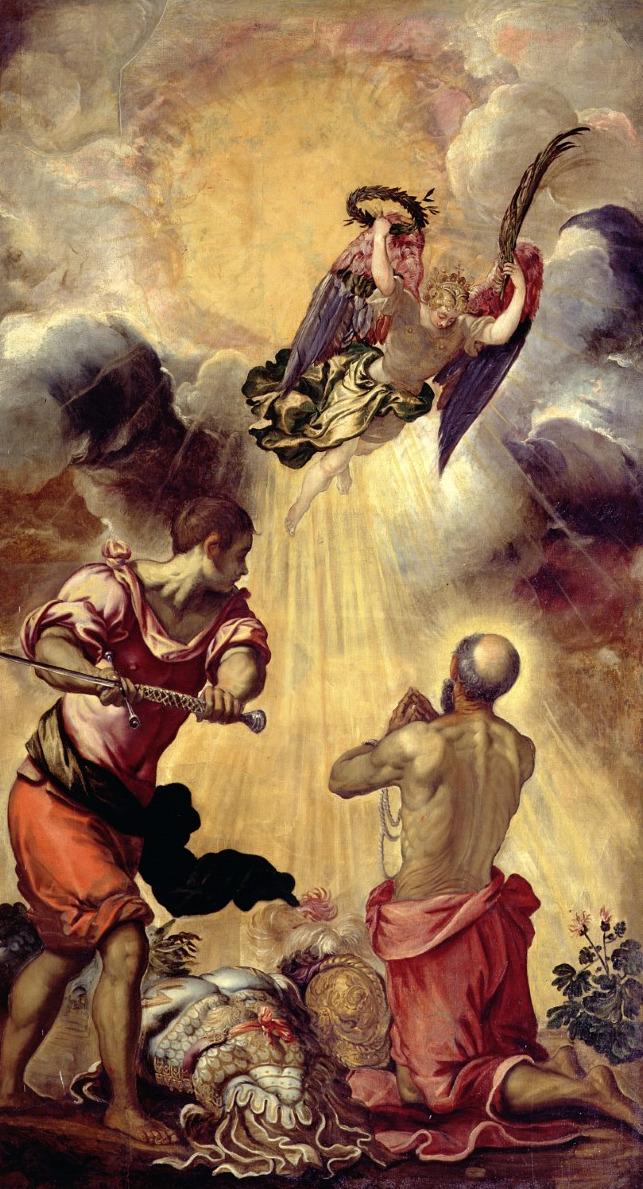
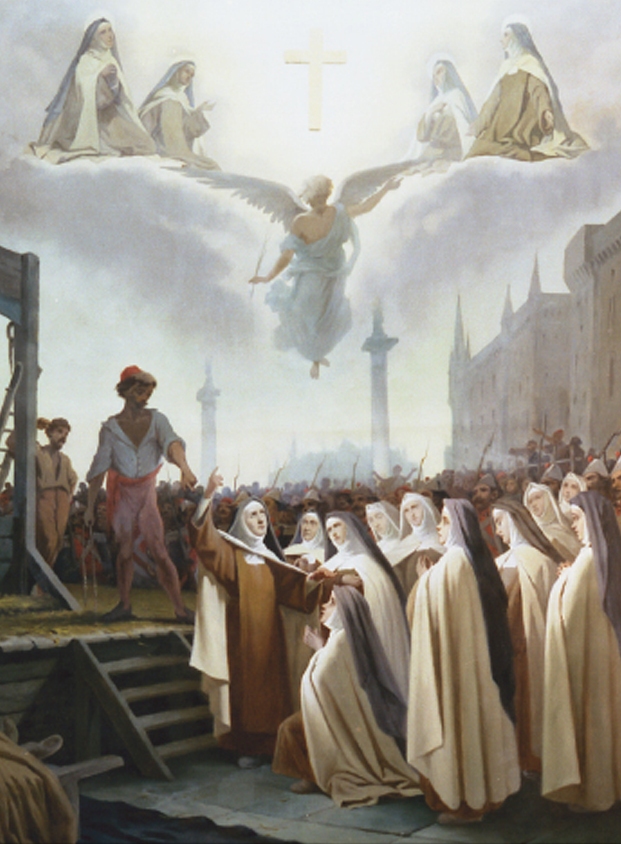
But if the world around us is fallen and hopeless, corrupting everything it touches, the solution cannot come from this world, it cannot come from us. Thank God, it came from God. That God could become man and walk among us, suffer worse than us, in public, abandoned by all, remains completely inconceivable to a Christian even today, it requires faith, because it is a Miracle. It is the Miracle that saves us all. That He truly rose, not as a ghost or an illusion, but with a real body, that eats and let us touch it, continues to make us tremble and fill us with immense joy at the same time15. That our own body is also called to the resurrection and to eternal life is a distinctive belief of Christianity, no other religion has elevated the body so highly as to reserve for it the highest spheres of eternity16. We will not be ghosts in Heaven, but we will have a real body, shining and transfigured, raised up in glory, in the presence of God, forever. This is the Christian creed, this is how important the body is for Christians.
Because love cannot exist without a body, it cannot be only with closed eyes, in silence, in meditation, on the internet, in chats, or expressed in books. It must also exist in our senses, in music, in art, in the sacraments. It must have flesh, be touchable, be edible. It cannot be only Thought in the mind, it must be Word. This is why God sent His only Son into the world, born of a woman, risen with a body. This is why He gave us the perfect sacrifice of the Eucharist, the true body and true blood of Christ, tasting of bread and smelling of wine. This is why He gave us the Church, gifting us not only written words, but men, imperfect and indispensable.
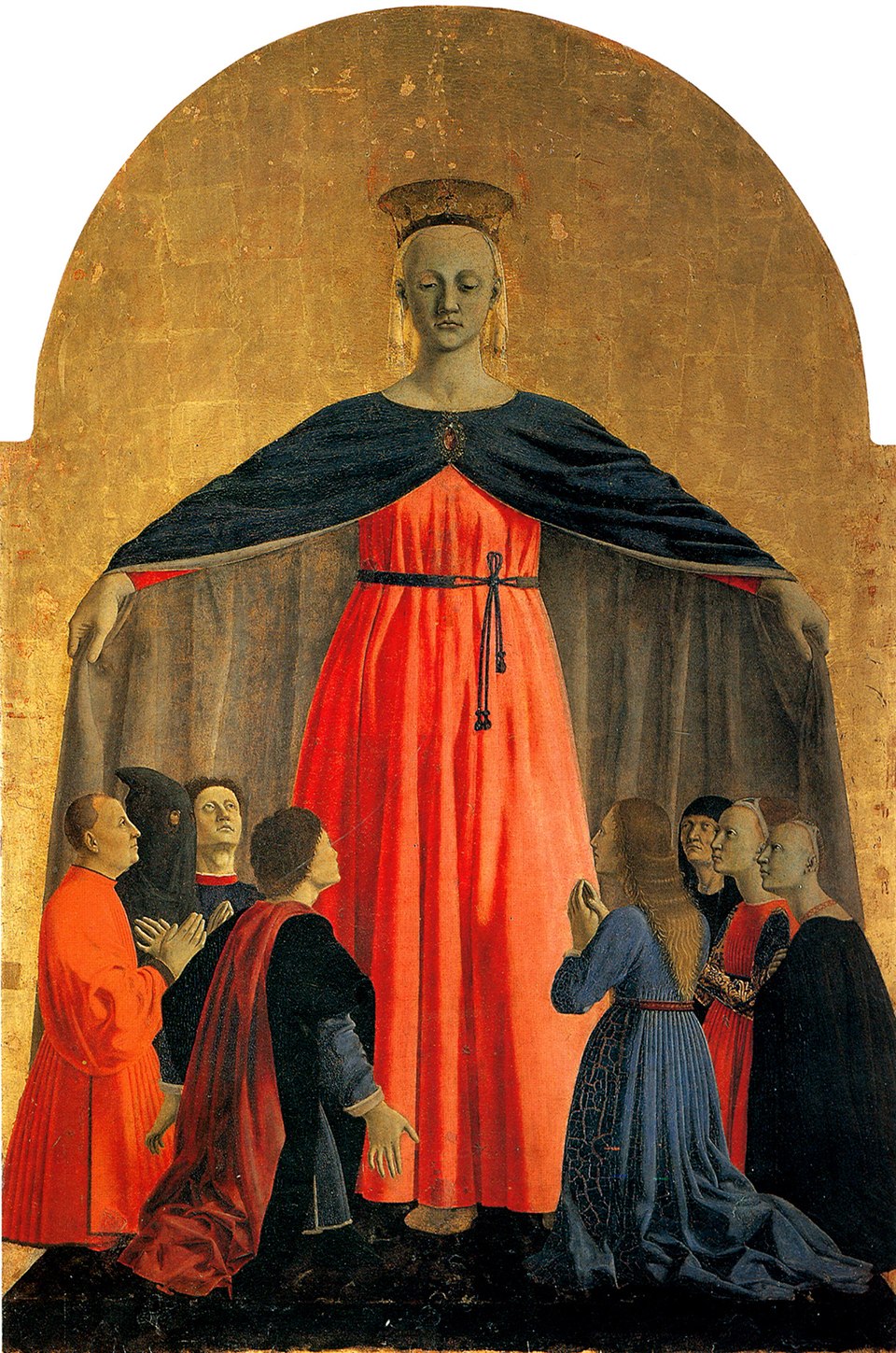
This post is dedicated to those who feel that their body, their home, their life, or the reality of this world are alien to them, as if they did not belong to them, and perhaps even blame God for this. Let us pray to Our Lady of Mercy, who welcomes everyone with open arms, to intercede for you and always show us the way to Salvation, which is Jesus, the Prince of Peace, who forgives all of our sins.
- From the sermons of Martin Luther on John and Matthew (1537)source: “During the papacy, painters portrayed the Virgin Mary [...] as she gathered emperors, kings, princes, and lords beneath her mantle, protecting them and interceding with her beloved Son so that He would not pour out His wrath and punishments upon them. For this reason, everyone invoked and honored her more than Christ. The Virgin Mary was thus turned into an abomination, into an idolatrous image and a scandal (though without fault on her part)” (p. 257). Again: “But was it not a great and horrible heresy that we placed all our trust in the mantle of our dear Lady, when she did not shed her blood for us? And even if she had shed it, it would still be far too insignificant to redeem the world with her blood. It is therefore idolatry that people have for the most part been led away from Christ under Mary's mantle, as the [Franciscans] have done” (p. 276). The Church, if it places itself above Jesus, is no longer the Church, just as Mary saving us with her blood is no longer Catholic doctrine. A God full of wrath and punishments, on the other hand, is typical of the Reformed traditionlink, just as it is the devil's success to set mothers and sons in false opposition (Genesis 3:16). Luther, however, understood that in order to do without the Catholic Church, one had to do without Mary, that is without body, women, and mothers.Let us take this opportunity for a nice biblical reflection: when Jesus saves women in the Gospels, He is always coming to save us, humanity and His Church, His Bride. This is true in Mark 5, when Jesus raises the daughter of Jairus, the synagogue leader, saying to her «Talitha cum!», «Little girl, arise!» (v. 41), just as when He stops the hemorrhage of the “unclean” woman who touches His garment. The girl is 12 years old, just as the woman has suffered bleeding for 12 years. At 12 years old, Jesus got lost for three days in the Temple (Luke 2:41-51). Twelve years indeed marks the coming of age for women in Jewish culture. A very similar episode is recounted in Acts 9: here it is Saint Peter, filled with the Holy Spirit, who in the name of the Risen Jesus raises Tabitha, a woman rich in good works. Here we encounter again the mantle: the widows mourning Tabitha's death, who is called “gazelle”, show Peter the cloaks and garments she used to make while she was alive. Then Peter says, «Tabitha, arise!» and the miracle is accomplished. As you can see, it is not the papacy that connects Jesus, Church, Peter, women, and mantles, but the Bible, time and time again: the one who saves us is always Jesus, even when He does so through His garment, that is His Church, founded on Peter, woven by Paul (in Acts 19, Saint Paul works as a tentmaker).
- An excerpt from an intervention by Roberto Pecchioli in the podcast Chronicles of Heaven and Earthsource: in a similar way, transhumanism, scientism, and modern gnosticism are linked to a hatred toward reality, nature, and the body.
- Mistreated and ignored of the whole world, unite, and you will finally become strong and powerful. The only salvation is always and only this, power. A narrative inaugurated by the Soviet Revolution, now presented to us again in a rainbow key. Yet it was the same narrative that led to the birth of the modern state of Israel —immediately favored by the Soviets—: what would save persecuted Jews across the world can only be the strength of a flag.Yet Jesus says otherwise (Matthew 5:38-45) and does otherwise: on the cross, Jesus conquers evil with weakness, by losing, not claiming His divinity, not coming down from the cross, as many urged Him to do (Matthew 27:39-44), but remaining on it. The power of evil is thus defeated forever. We would never have arrived at this. Like the Jews, we would have freed Barabbas and fought against the Romans with stones and clubs (Luke 23:17-19). Thanks to God, there is a way out of arms: submission to a good God who has always loved us, the choice to be weak, to turn the other cheek, to reveal and give glory to His strength, which can do all things, even the impossible.
- Aliens have strongly populated the collective imagination for at least a century. For K. Marx, it is the new human condition in capitalism (Protestant, for M. Weber), but in reality it goes far beyond the walls of factories. In general, it is a head that does not belong to the body it inhabits. It is the Martian who comes to live on Earth, a worker in a workplace —the factory, the office— that does not belong to him —or who produces things that do not belong to him—, a man surrounded by too much technology who loses contact with nature, but also an immigrant in a foreign land (see District 9), or a child with divorced parents who finds himself in a new family or a new home (see Spielberg and E.T.). But it can also be a political elite detached from the interests of citizens —hence the reptilians and the bankers who control countries that do not belong to them.They are the opposite of giants: instead of being stupid, crude, with one eye, but with an enormous and strong body that they can barely control (see today’s “Tech Giants”), aliens are often super intelligent, with a huge head, enormous eyes or many eyes, but a slender, almost rachitic, hairless and delicate body, yet capable of controlling even bodies beyond their own (see the telekinesis of E.T., but also the aliens of They Live by Carpenter who indoctrinate the population). Kubrick's alien is no exception, it is an ethereal, conceptual body, a perfect parallelepiped, while the assistant Hal is pure voice, the body disappears entirely.
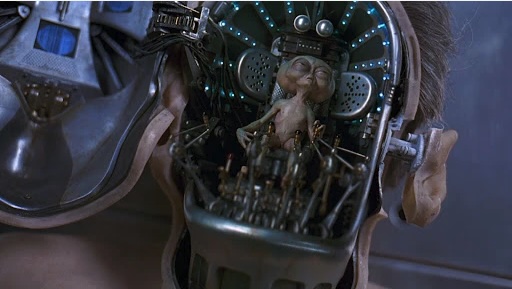
The mini-alien from Man In Black (1997). 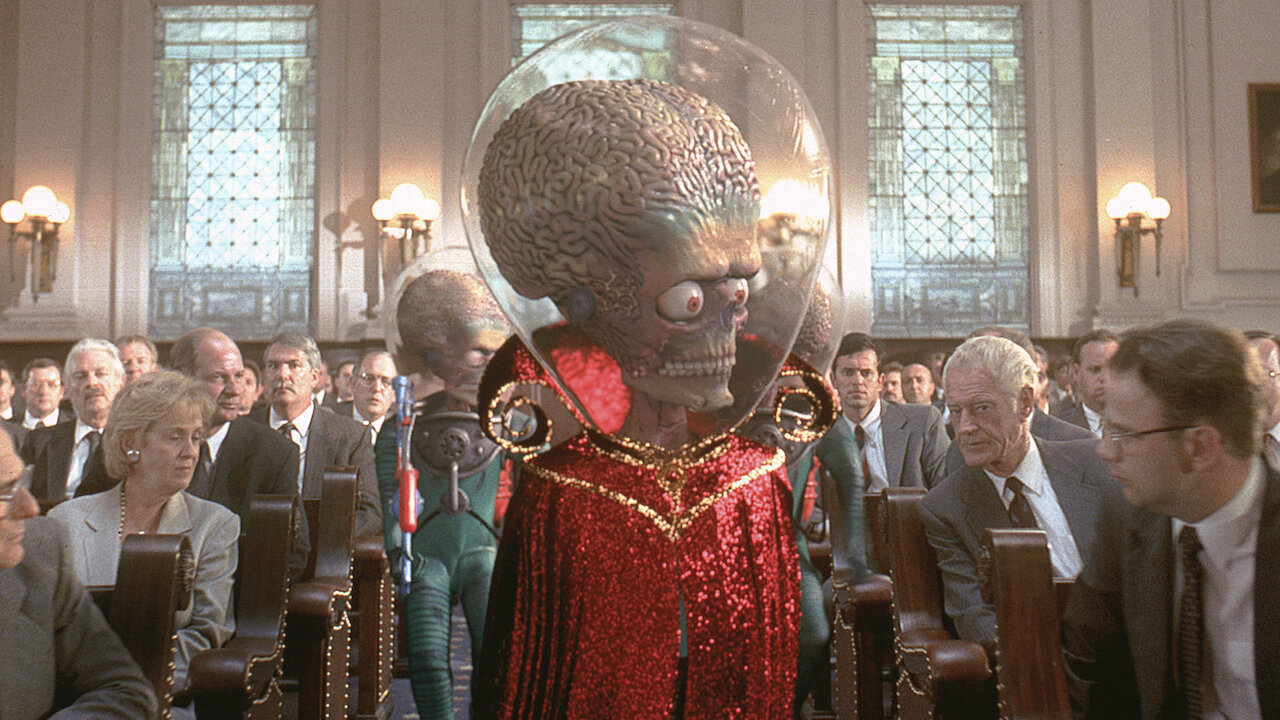
The alien in Mars Attack (1996). He becomes a man-god when he elevates himself above his own position, guided by pride: he is the reptile that emerges from the water and begins to walk on two legs on dry land, wanting to dominate an environment that does not belong to him by nature. He is the lineage of Cain that builds towers of bricks with fire to reach and dominate the Heavens, to give itself a name (“let us make a name for ourselves“, Genesis 11:4). He becomes a man-god also when, instead of Marx's “master“, there is God: instead of the factory, one now wants ownership of the world and of reality, instead of ownership of machines, man craves technology and power, so as to replace the “master“, God, and become like Him, immortal, all-powerful and all-seeing. The totalitarian state follows, that spies on and controls everything.But God is a Good Shepherd, not a master, man is not destined to produce (homo economicus), but is destined for love (homo amans).How does it end? In the novel “The War of the Worlds“, the Martians who torment humans —they are indeed the spirits that want us selfish and alone— all succumb, “killed off, after all the strategies of men had failed, by the humblest things that God, in His wisdom, has placed on this earth“. In H.G. Wells' novel (1898), they are bacteria, which closely resemble Tolkien's Hobbits, small and hairy, humble and therefore ignored by the watchful eye of Sauron. In Mars Attack it is a country love songplay that drives the Martians mad. In the city of Babel, it is the confusion sent by God that disperses the proud. In the history of human salvation, surprisingly, it is the Cross, the symbol of the most humiliating death, that becomes redemption for the whole world, thanks to the love of Jesus that overcomes it. - In the words of Jeremy Howardvideo, co-founder of fast.ai and author of important studies in the field of AI: “LLMs [the AI models behind chatbots like ChatGPT and similar] cospays[the now widespread practice of wearing costumes of cartoon characters, especially Japanese ones] understanding things. They pretend to understand things. [...] That's basically what the Chinese Room experiment iswiki: you've got a guy in a room who can't speak Chinese at all, but he sure looks like he does because you can feed in questions and he gives you back answers, but all he's actually doing is looking up things in a huge array of books or machines or whatever. The difference between pretending to be intelligent and actually being intelligent is entirely irrelevant [from a utilitarian perspective, ontologically it matters], as long as you're in the region in which the pretense is effective. So it is actually fine for many tasks that LLMs only pretend to be intelligent, because for all intents and purposes it just doesn't matter, until you get the point where it can't pretend anymore. And then you realize, like, oh my God. This thing is so stupid!”.In technical terms, modern AI is a form of weak AI: it is trained to simulate human behavior across millions of different textual contexts, but it is not intelligent, nor does its internal structure or learning method aim to imitate the human. That appearing is enough was, after all, argued by the famous computer scientist Alan Turing in his well-known Turing testwiki, and modern society continues to find this idea extremely appealing.
- “Some of the Pharisees near him heard this and said to him, «Surely we are not blind, are we?». Jesus said to them, «If you were blind, you would not have sin. But now that you say, “We see”, your sin remains».” (John 9:40-41).
- Conspiracies to discredit the Resurrection of Jesus began even before He revealed Himself risen to the apostles. Saint Matthew (28:11-15) recounts that, when the tomb was found empty, the Jewish leaders “gave a large sum of money to the Roman guards” on duty to spread the rumor that “his disciples came by night and stole him away while we were asleep”; they would take care of the governor, since falling asleep on guard duty could risk the death penalty. In a comedic sketch by Babylon Bee, the apostles are imagined plotting to spread news of a fake resurrection, though their “brilliant” plan also includes their brutal martyrdom. Eleven apostles, because, according to tradition, Saint John was persecuted until his natural death in the city of Ephesus, after his exile on Patmos.
- The idea that intelligence has something to do with the physical world, with having a body and interacting with the world through it, not merely with having read many written words, has long been supported by computer scientist Yann LeCun, Turing Award winner for deep learning, who only recently left Meta (Facebook) to strike out on his own. In his wordsvideo: “So currently, AI systems are in many ways very stupid. We are fooled into thinking they are smart because they can manipulate language very well, but they don't understand the physical world, they do not possess persistent memory like ours, they are not capable of reasoning or planning, and these are essential features of intelligence”. Later in the interview, he also speaks about machines that experience emotions.
- “Sola fide” and “Sola scriptura” are two of the well-known theological formulas of Protestantism, which once again place in false opposition the inner faith within each of us and the outward works we perform, the reading of sacred texts and their interpretation and application in the real world. Every corner of the Gospels reveals that, while remaining distinct aspects, theory and practice are inseparable and continually enrich one another. Among the most striking and memorable passages: Jesus explaining the whole of Scripture while walking with His two disciples on the road to Emmaus, and revealing Himself fully to their eyes only when He performs the act of breaking the bread and speaks the words of blessing in the Eucharist (Luke 24:13-35). Even more explicitly, Saint Paul (Hebrews 5): “You will not be able to partake of solid spiritual food, nor understand the deeper things of the Word of God, until you become mature Christians and learn to distinguish truth from falsehood, by practicing what is good.”
- The AI behind chatbots like ChatGPT and similar systems consists of learning models trained on the simple task of predicting the next word in a text: given any portion of text written somewhere on the internet, the AI estimates the probability of the next word and adjusts its predictions based on past errors. At the end of this process, which lasts for months, it is refined through training on typical chatbot conversations, so it learns to greet and say thank you. It does not think, it does not reason, it predicts words. That is what it does, and it does it well.The bestselling writer Yuval Noah Harari, an atheist Jew, raises a provocation on the stage at Davosvideo: “Some argue that AI is just an glorified autocomplete. It barely predicts the next word in a sentence. But is that really different from what the human mind does? [...] AI already thinks better than many of us. Therefore, anything made of words will be taken over by AI. If laws are made of words, AI will take over the legal system. If books are just combinations of words, AI will take over books. If religions are founded on words, AI will take over religions. This is particularly true for religions based on books like Islam, Christianity, and Judaism”. It is not entirely clear whether Harari himself believes these claims, since he later rightly points to the importance of the body, emotions, and lived experience, even in religion. To remove any doubt, it is enough to say that Christianity (and Judaism as well) is not “based on a book”, but on a historical event —the Resurrection— and on an encounter with a Person, who is Jesus, through whom all things in this world were created. Therefore, unless one were to recreate the world and history, in a kind of Matrix-like fashion, a model that predicts text could never replace all this. The risk of idolatry, however, remains real in a world searching for cheap spirituality.
- When one says “according to nature”, one usually does not mean “like animals do”, but rather refer to the natural law (CCC 2357), which philosophy and theology have discussed for a long time: it is the participation of the human mind in the eternal divine law, accessible to everyone autonomously through the intellect. It is the spontaneous instinct of human beings, albeit “tainted”, to do good, or at least to intuit it. [Here Noam Chomsky, though an atheist, recognizes in children an innate knowledge of what is right, but ends up asking how we can be certain that it is also correctvideo].From the Catechism of the Catholic Church: “Natural law [...] is the light of understanding placed in us by God; through it we know what we must do and what we must avoid. God has given this light or law at the creation”, “The natural law provides revealed law and grace with a foundation prepared by God and in accordance with the work of the Spirit”. It is that law inscribed in reality and in nature, not revealed, which has led all religions and philosophies of the world to intuit and attain certain true and just concepts, albeit always obscured and incomplete (CCC 843). In the New Testament, Jesus appeals to it when instructing us on the bond of marriage —From the beginning of creation, He made them male and female; [...] Therefore what God has joined together, let no one separate (Mark 10:6-9); Saint Paul when he praises “Gentiles, who do not have the law, [but] do by nature what the law requires” (Romans 2:14); he appeals to it again to rebuke human passions that lead us to commit “relations against nature” (Romans 1:26).But it does not end there. All creation participates in natural law. The whole world speaks of and points to God, just as every work of art says something about its author. In the Thomistic perspective —Thomas Aquinas (1244-1274)— the nature of anything points toward an end; every form orders matter toward a telos. Therefore, we cannot say “chair” without saying “to sit”, and we recognize a chair in reality only if one can sit on it (and we know what it means to sit). If we find a Paleolithic artifact, we can presume its purpose. Just as we distinguish a stone from a pebble based on their purposes: with a stone we can hold a door open, a pebble can easily be thrown —see how scientism instead claims to give only apparent distinctions, with a ruler, forgetting ends. Having explained this, it becomes clear why marriage is heterosexual by nature: reality presents man and woman as complementary —physically, biologically, and spiritually— and only their union generates new life in offspring. All other unions have other ends and, following the metaphor, use chairs as tables, with the pretense and the risk of making us forget what it means to sit.
- Sodomy hurts first of all our soul, but it hurts us phisically as well (just few examples,). Just like using a tool for a purpose it wasn't designed for —for example, using food as a game— mistreating the body both humiliates it and risks harming it.
- In a videolink from the YouTube channel “The Enemies Project”, which seeks to reconcile apparent enemies, “Eva”, who presents outwardly as a woman, at one point admits with sincerity: “I don't want this life. I don't want to be trans. I want to be a man. I tried, but I didn't make it”. The will is there, but human nature remains weak (Matthew 26:41). This feeling of “detachment“ not only from the body, but also from nature, home and family, is set to music by Elton John in his famous song Rocket Man: “I miss the Earth so much, I miss my wife. It's lonely out in space“, “Mars ain't the kind of place to raise your kids. In fact, it's cold as hell“. May the Holy Spirit bring these souls back to Him.
- Gnosticism was a heresy fought by the Catholic Church in the first centuries after the coming of Christ. It opposes spirit and matter, favoring the former and disparaging the latter. Pope Francis describes it as “one of the worst ideologies”, calling it “disincarnate spirituality” and “narcissistic elitism“. But it's not just the exaltation of “gnosis”, the knowledge reserved for a few chosen, which judges rather than evangelizes, it is also a rejection of all that is human and mortal. If matter is “dirty”, the gnostic cannot accept the Incarnation. For Muslims, a God dying on the cross is inconceivable for this reason: God is transcendent, in mosques there are geometric, floral, and written decorations, but nothing more can be said about God. Paradoxically, many Protestant churches have become equally austere: since matter “distracts” our spirit, crucifixes have become empty crosses, geometric forms without flesh. Similarly, many Eastern spiritual practices try to convince us that we can reach God with closed eyes, in our mind, and without others.
- But the angel said to the women [Mary Magdalene and the other Mary]: «Do not be afraid! I know you are looking for Jesus who was crucified. He is not here; for he has risen, as he said. Come, see the place where he lay. Then go quickly and tell his disciples: He has risen from the dead, and indeed he is going ahead of you to Galilee; there you will see him. This is my message for you.» So they left the tomb quickly, with fear and great joy, and ran to tell his disciples.(Matthew 28:5-8).
- The body holds a place of particular importance in the Catholic tradition: for this reason, the relics of the saints are venerated, burial is preferred over cremation, we participate in Mass with the whole body, and there is an encouragement to love the natural body, against the idolatry of “ideal” bodies (here Pope Leo XIV against cosmetic surgery and the “cult of the body”, par. 47). The contrast is particularly evident not so much with materialism, which sees us as a conglomerate of atoms, dust without spirit, but rather with other religious traditions, especially Eastern ones. In Hinduism, our soul is one and eternal, but it is a “guest” in many bodies through reincarnation —like a husband who changes many wives. In Jainism, the body is actually an obstacle, a prison of the soul and a source of suffering, the goal is to free oneself from it. In Buddhism, the body is one of many modes of existence; in nirvana attained during life, the body is no longer part of the self, and after death it is surpassed.In the Christian faith, as professed in the Creed (“I believe in the resurrection of the body”), since Jesus rose in both soul and body, and since we, filled with the Spirit, are His body, we have hope of rising with Him: then our “mortal body will be clothed with immortality” (1 Corinthians 15:53); it will no longer be a corruptible body, but incorruptible, in glory, yet it will remain a body, with its identity and even the marks of its past wounds. We mourn death because it separates soul and body, but “we do not grieve like the others” (1 Thessalonians 13), because we believe they will be reunited in Heaven, in Christ, at the end of time.